
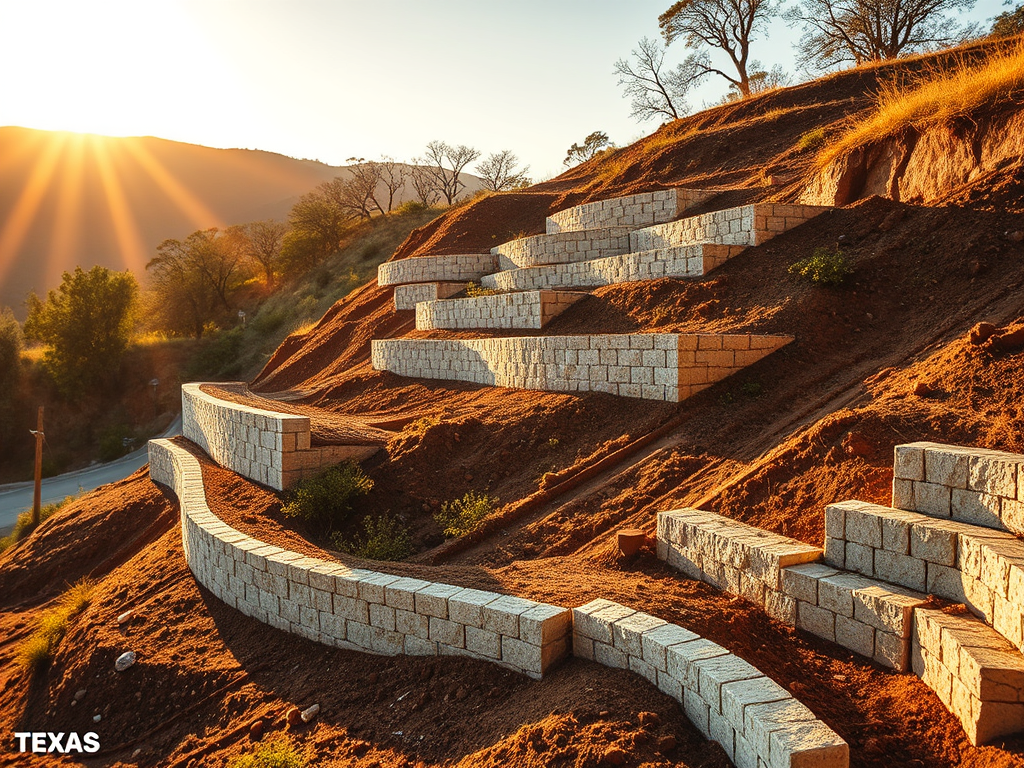
Choosing the Right Retaining Wall for Your Project
Retaining walls are a critical part of many construction and land development projects across Texas. From managing elevation changes in the Texas Hill Country to stabilizing soil for residential and commercial builds, the right retaining wall protects your property, improves drainage, and adds long-term value.
In this guide, we’ll break down the most common types of retaining walls, how they’re used, and where retaining wall construction services are most in demand across Texas.
Why Retaining Walls Are Important in Texas
Texas properties face unique challenges, including:
- Expansive clay soils
- Rocky limestone terrain
- Sloped and hillside lots
- Heavy rain events and erosion risks
A properly designed retaining wall helps:
- Prevent soil erosion
- Stabilize slopes and foundations
- Manage water runoff and drainage
- Create usable, level building areas
- Protect structures, driveways, and landscapes
Common Types of Retaining Walls
1. Gravity Retaining Walls
Gravity retaining walls rely on their own weight to hold back soil. They are typically constructed from concrete, stone, or masonry blocks.
Best for:
- Low-height walls (under 4 feet)
- Landscaping and garden applications
- Residential yards
2. Cantilever Retaining Walls
Cantilever walls are made of reinforced concrete and use a footing to distribute pressure from the retained soil.
Best for:
- Medium to tall walls
- Residential and commercial construction
- Driveway and building support
3. Counterfort Retaining Walls
Counterfort walls are similar to cantilever walls but include reinforcing supports on the back side of the wall to increase strength.
Best for:
- Very tall retaining walls
- Commercial developments
- Heavy load conditions
4. Segmental Retaining Walls (SRW)
Segmental retaining walls use interlocking concrete blocks and often include geogrid reinforcement for added stability.
Best for:
- Residential properties
- Decorative and structural applications
- Flexible designs on uneven terrain
5. Anchored Retaining Walls
Anchored retaining walls use tiebacks or anchors driven into soil or rock behind the wall.
Best for:
- Tight construction spaces
- Tall walls with limited footprint
- Hillside and urban projects
6. Sheet Pile Retaining Walls
Sheet pile walls are constructed by driving steel, vinyl, or wood sheets into the ground.
Best for:
- Soft soils
- Temporary or permanent excavation support
- Flood-prone or waterfront areas
7. Soldier Pile and Lagging Walls
This system uses vertical piles with horizontal lagging panels between them.
Best for:
- Deep excavations
- Commercial and industrial projects
- Sites with restricted access
8. Mechanically Stabilized Earth (MSE) Walls
MSE walls use layers of soil reinforcement combined with precast concrete panels or blocks.
Best for:
- Large-scale developments
- Roadways and infrastructure
- High retaining walls
How to Choose the Right Retaining Wall
Selecting the right retaining wall depends on:
- Wall height and soil conditions
- Drainage requirements
- Load above the wall (homes, driveways, parking areas)
- Available space
- Local building codes and engineering needs
In Texas, walls over a certain height often require engineering and permitting, especially in areas with expansive clay or rocky terrain.
Areas We Service in Texas
Retaining wall construction is in high demand across Central and South Texas. Service areas commonly include:
Texas Hill Country
- Boerne
- New Braunfels
- Fredericksburg
- Kerrville
- Dripping Springs
- Bulverde
Greater San Antonio Area
- San Antonio
- Shavano Park
- Helotes
- Stone Oak
- Alamo Heights
Greater Austin Area
- Austin
- Lakeway
- Bee Cave
- West Lake Hills
- Cedar Park
- Round Rock
Surrounding Central Texas Communities
- San Marcos
- Seguin
- Kyle
- Buda
- Blanco
These areas frequently require retaining walls due to sloped lots, limestone rock, and drainage challenges.
Work With a Professional Retaining Wall Contractor in Texas
A retaining wall is not just a landscaping feature—it’s a structural system. Poor design or installation can lead to:
- Wall failure
- Drainage issues
- Foundation damage
- Costly repairs
Working with an experienced Texas retaining wall contractor ensures proper site evaluation, drainage planning, and long-term performance.
Email: TrueStoneSiteWork@gmail.com
Industries We Serve for Retaining Wall Construction in Texas
Retaining wall needs vary greatly depending on the type of project. From residential homesites in the Texas Hill Country to large-scale commercial and civic developments, each industry requires a different approach to design, engineering, and installation. We work with a wide range of clients across Texas to deliver retaining wall solutions that meet structural, drainage, and code requirements.
Residential Retaining Walls
Homeowners and custom builders rely on retaining walls to manage elevation changes and protect foundations.
Common residential applications include:
- Hillside lot stabilization
- Yard and landscape retaining walls
- Driveway and private road support
- Erosion control and drainage management
- Creating level pads for custom home construction
Residential retaining walls often combine function and appearance, making segmental and reinforced concrete walls popular choices.
Commercial Retaining Walls
Commercial properties require retaining walls designed to handle higher loads and long-term use.
Common commercial applications include:
- Retail centers and office developments
- Multi-family and apartment complexes
- Parking lots and access roads
- Building pads and site grading support
- Stormwater management systems
Commercial retaining walls frequently require engineered solutions such as cantilever, anchored, or MSE walls.
Civic and Municipal Retaining Walls
Civic and public projects demand retaining walls built to strict standards and long service life expectations.
Common civic applications include:
- Roadway and street improvements
- Public parks and trails
- Drainage channels and flood control
- School and municipal facilities
- Infrastructure and utility support
These projects often involve permitting, inspections, and coordination with local municipalities and engineers.
Industrial Retaining Walls
Industrial retaining walls must withstand heavy equipment, traffic, and operational loads.
Common industrial applications include:
- Warehouse and distribution centers
- Manufacturing facilities
- Equipment yards and loading areas
- Rail and logistics facilities
- Large-scale earth retention systems
Industrial projects often use soldier pile, sheet pile, or reinforced concrete retaining walls for maximum strength and durability.
Why Industry Experience Matters
Each industry has unique requirements related to:
- Load-bearing capacity
- Safety and compliance
- Drainage and erosion control
- Longevity and maintenance
- Engineering and permitting
Working with a retaining wall contractor experienced across residential, commercial, civic, and industrial projects in Texas helps ensure the right solution is selected from the start—saving time, money, and risk.
Contact us for a site evaluation or project estimate: TrueStoneSiteWork@gmail.com

Leave a Reply